
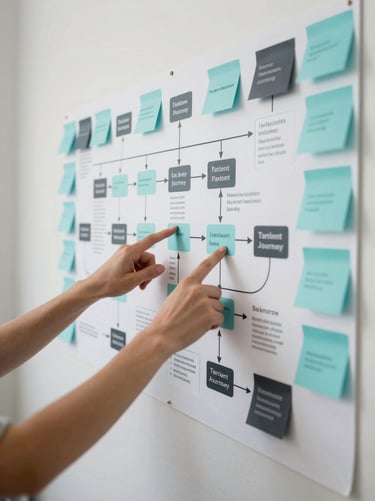

Wide editorial shot of a large-format user journey map pinned to a white wall, annotations and sticky notes in teal and charcoal, hands of a designer pointing to a patient flow node, bright even north-facing studio light, close-up framing from left edge pulling into the right canvas edge
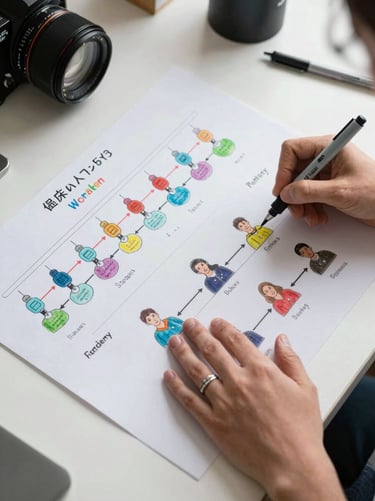
Close overhead shot of two side-by-side hand-drawn user behavior maps on large paper sheets, one labeled with clinical workflow nodes, one with patient journey steps, annotated with colored markers, bright even studio lighting, white desk surface
Wide environmental shot of a designer annotating a printed information architecture diagram laid flat on a large table, sticky notes clustering around navigation nodes, natural light from a window to the left, hands mid-gesture over the diagram, clinical office setting in background
/ Case Study — Health UX
— Research Brief
+ Personas & Architecture

MediConsult: Two Users, One Coherent Experience

Doctors and Patients Do Not Share a Mental Model

Architecture Built on Observed Behavior, Not Assumed Workflows

End-to-end UX research and design for a doctor-patient consultation platform — from conflicting mental models through behavior-mapped architecture to validated, development-ready prototypes.

Interviews with twelve clinicians and nineteen patients surfaced a core tension: doctors prioritize diagnostic efficiency and record precision; patients prioritize clarity, reassurance, and follow-up continuity. A single interface had to serve both without collapsing either journey.

Two validated personas — a general practitioner managing high consultation volume and a first-time patient navigating a digital health interaction — anchored every navigation decision.
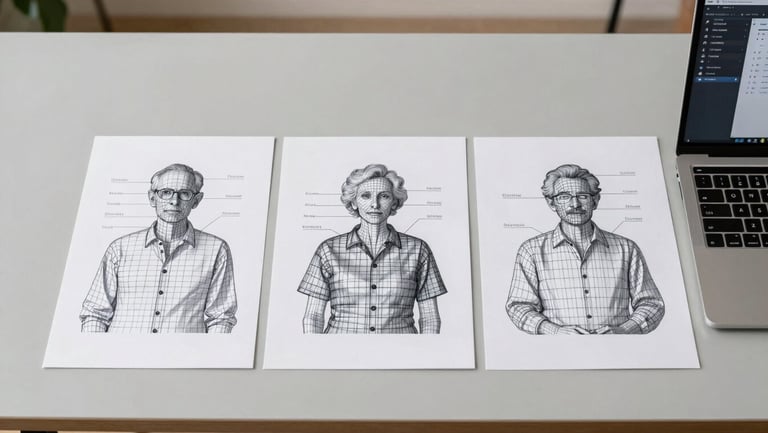
Wide overhead studio shot of three generations of wireframe printouts arranged in a horizontal sequence on a light grey desk, annotations marking iteration changes between versions, a Figma-open laptop partially visible at the right edge, bright even north-facing light
Prototype Iterations

Three Rounds to a Handoff-Ready Build

Each prototype round targeted a specific open question: round one tested task completion paths, round two stress-tested the shared navigation model, round three validated clinical record entry against real consultation scenarios.

Usability findings from each round fed directly into the next iteration brief — no design decisions carried forward without a behavioral rationale. Development handoff included annotated component specs and a documented decision log.